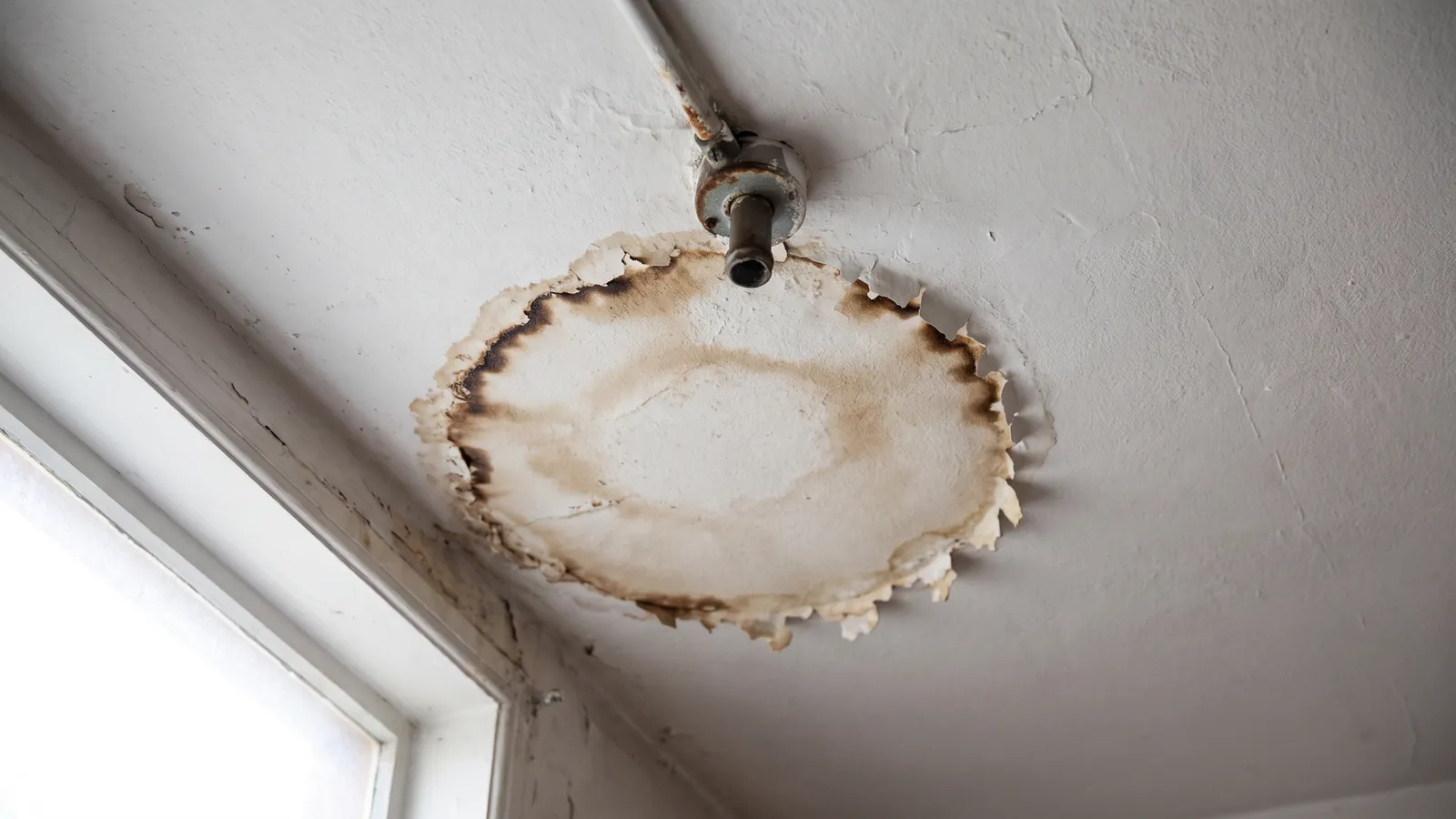
Roof leak repair
Flashing, vent boots, valleys and nail pops traced from the attic down rather than guessed at from the stain on the ceiling.
Leaks →Leaks, wind-torn shingles, emergency tarping, insurance inspections, full replacements, metal, FORTIFIED upgrades and commercial work from Waveland to Gautier. Permits pulled where Gulfport requires them, which is on every reroof, and the figure agreed in writing before anything is torn off.
Tarped first · Documented for the adjuster · Permits and inspections handled · Written figure before the tear-off
Nobody quotes a roof from the driveway. Someone goes up, photographs it, and the figure comes after that.
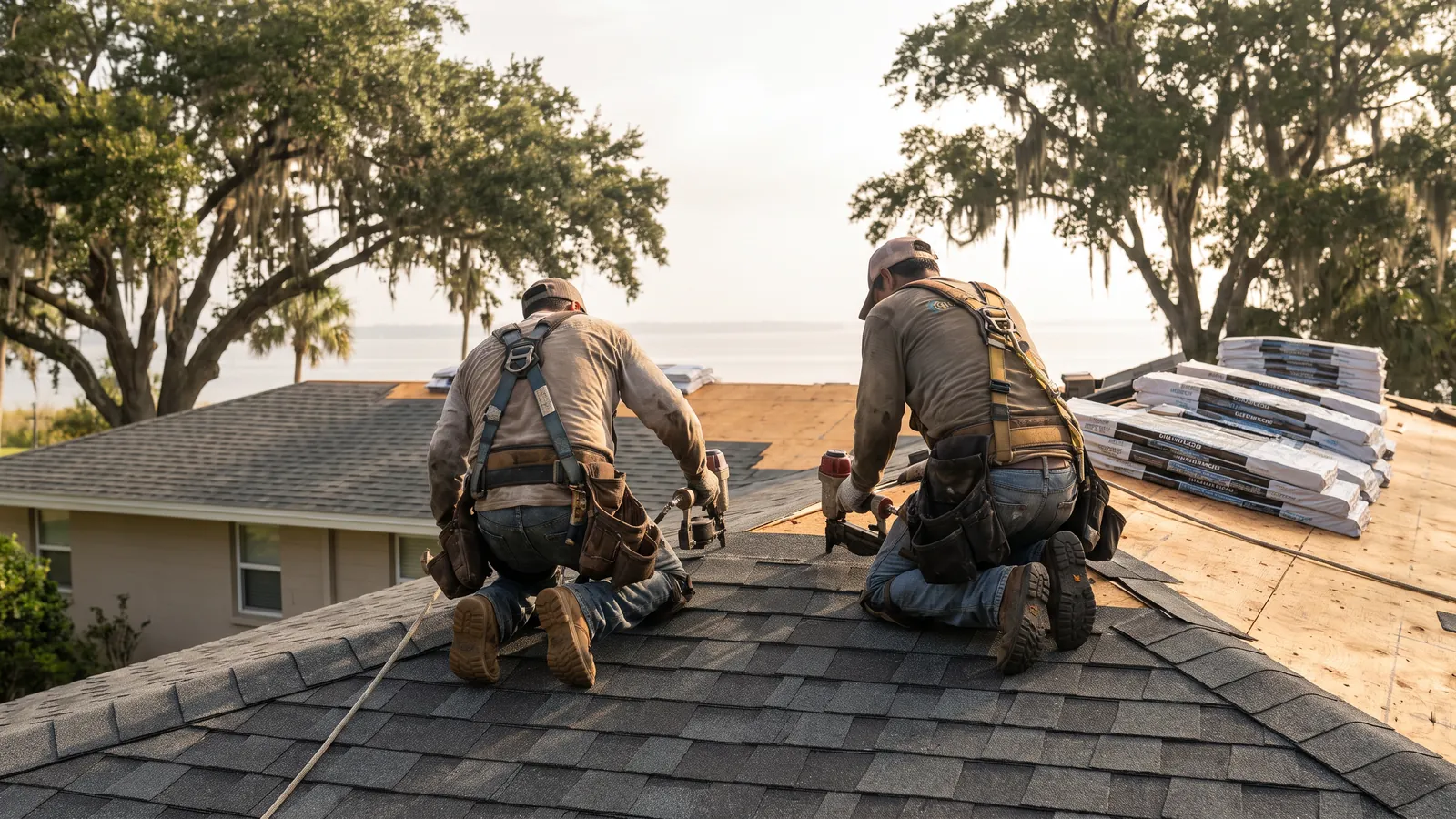
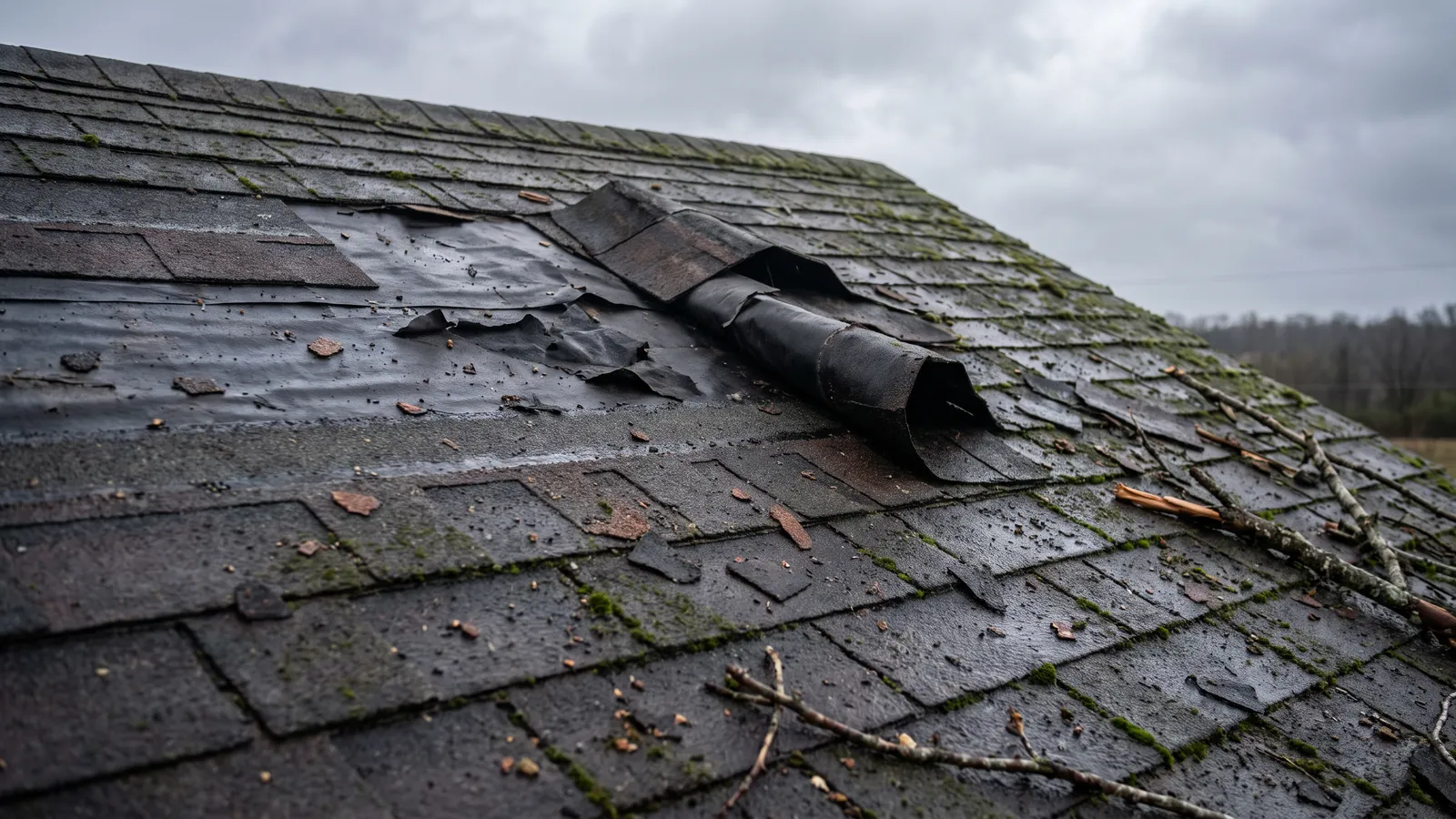
Flashing, vent boots, valleys and nail pops traced from the attic down rather than guessed at from the stain on the ceiling.
Leaks →Wind uplift, missing courses and the loose shingles either side of the gap that nobody counts until they blow off next time.
Storm damage →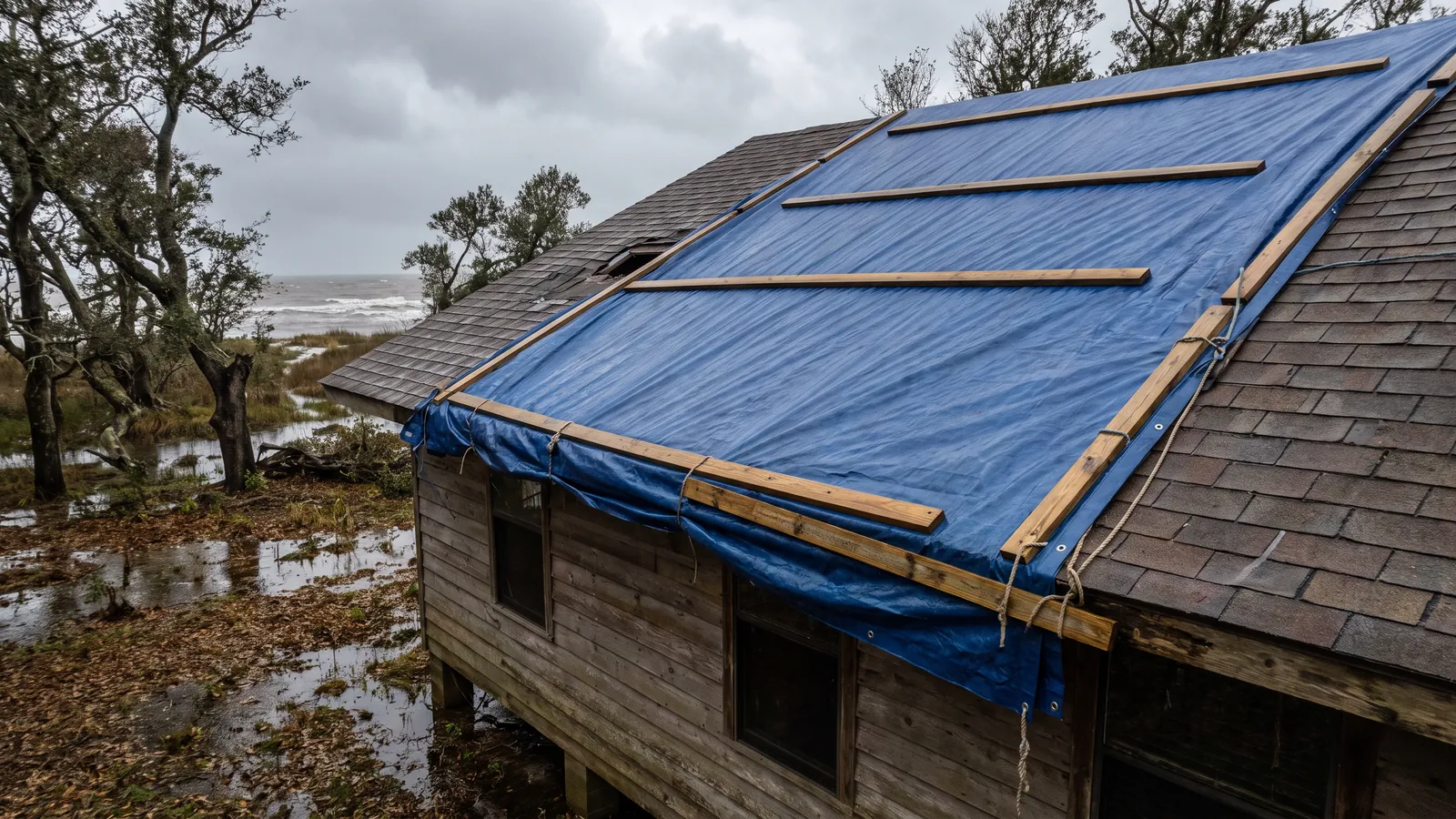
Battened properly over the damaged slope so the decking stops absorbing water while the claim and the schedule catch up.
Tarping →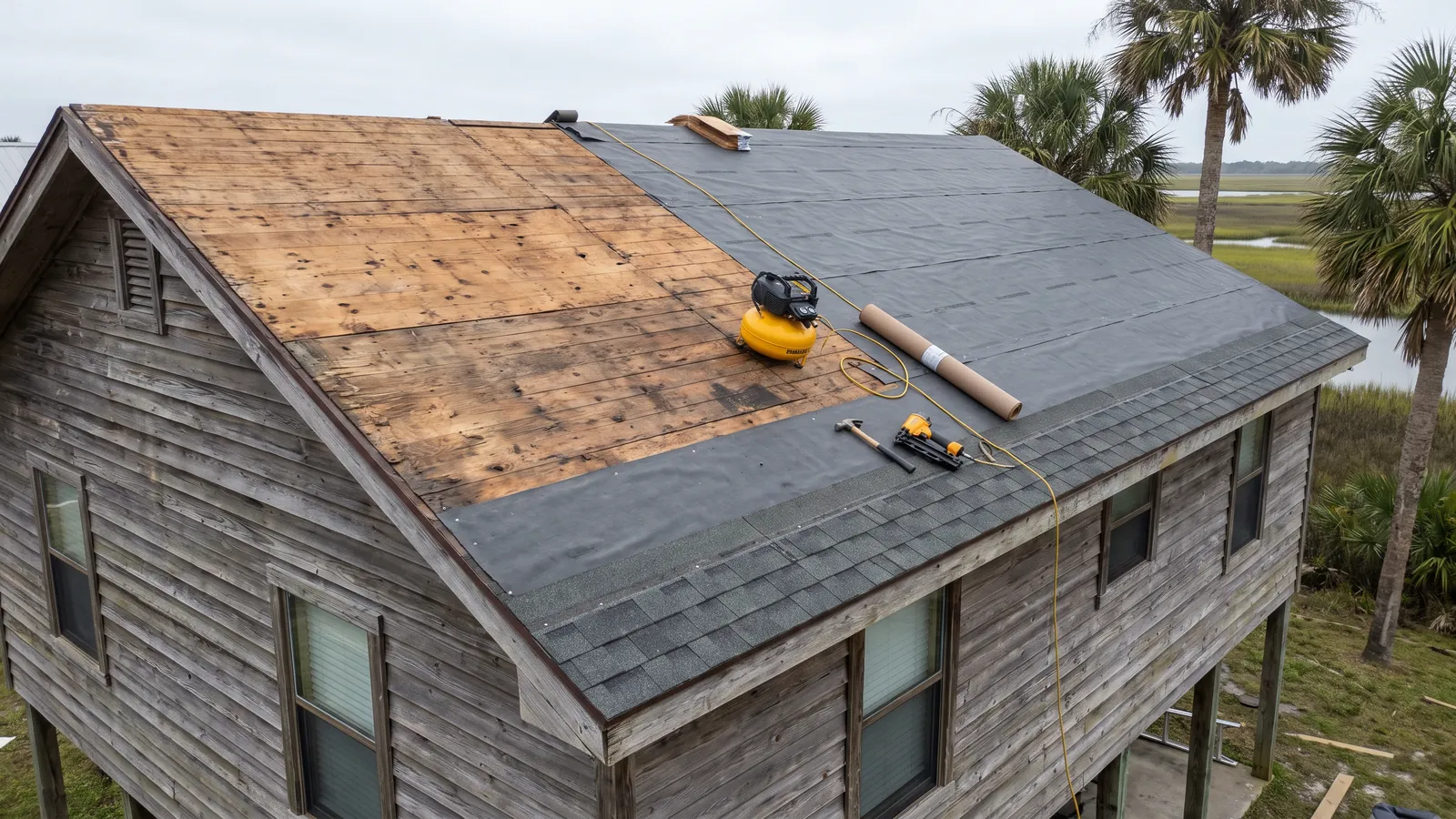
Full tear-off to the deck, decking repaired where it has gone soft, permit pulled, nailing inspection booked, one layer only.
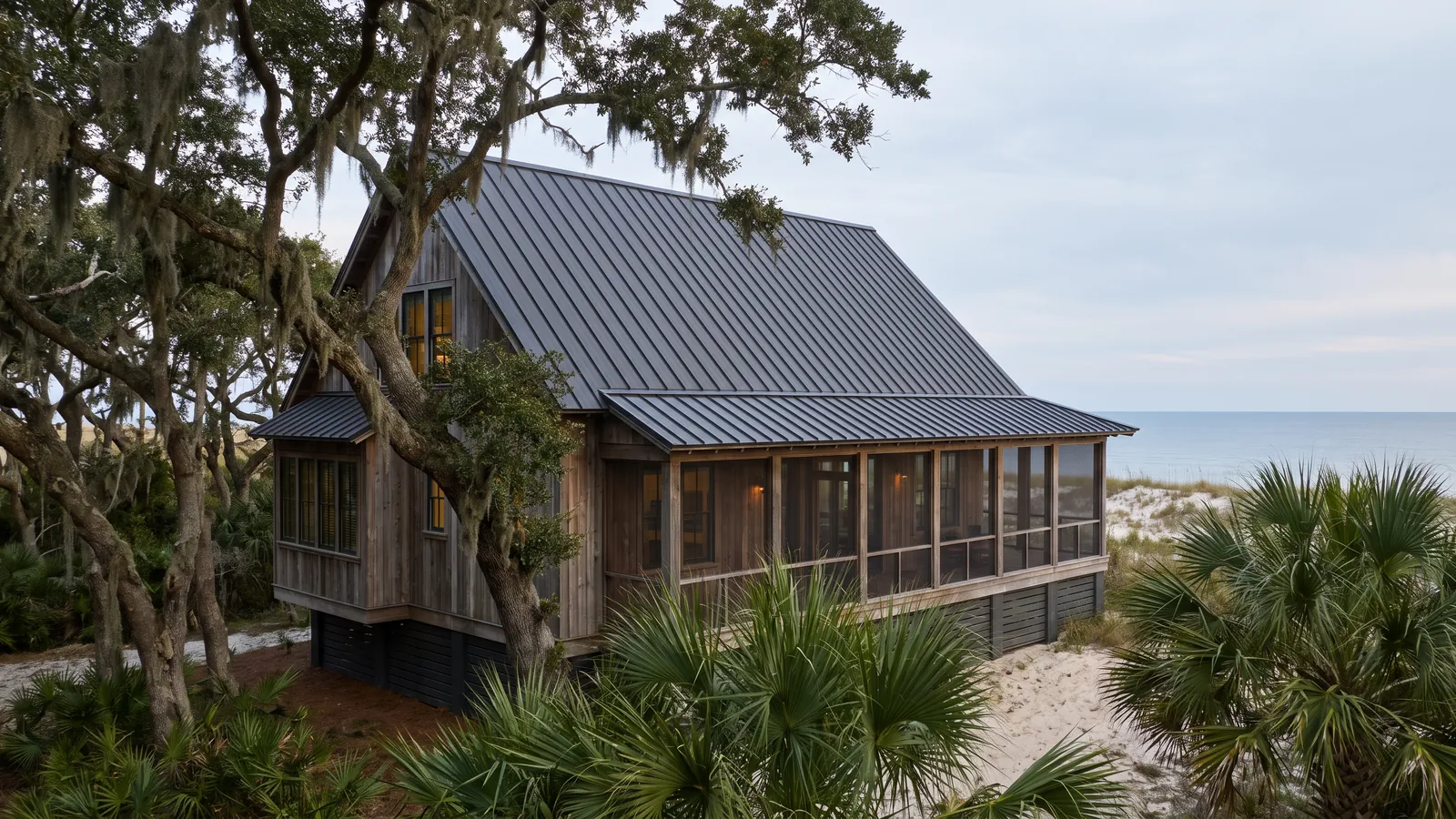
Replacement →Standing seam and exposed-fastener systems at 26 gauge or heavier, which is both the code minimum here and the sensible one.
Metal →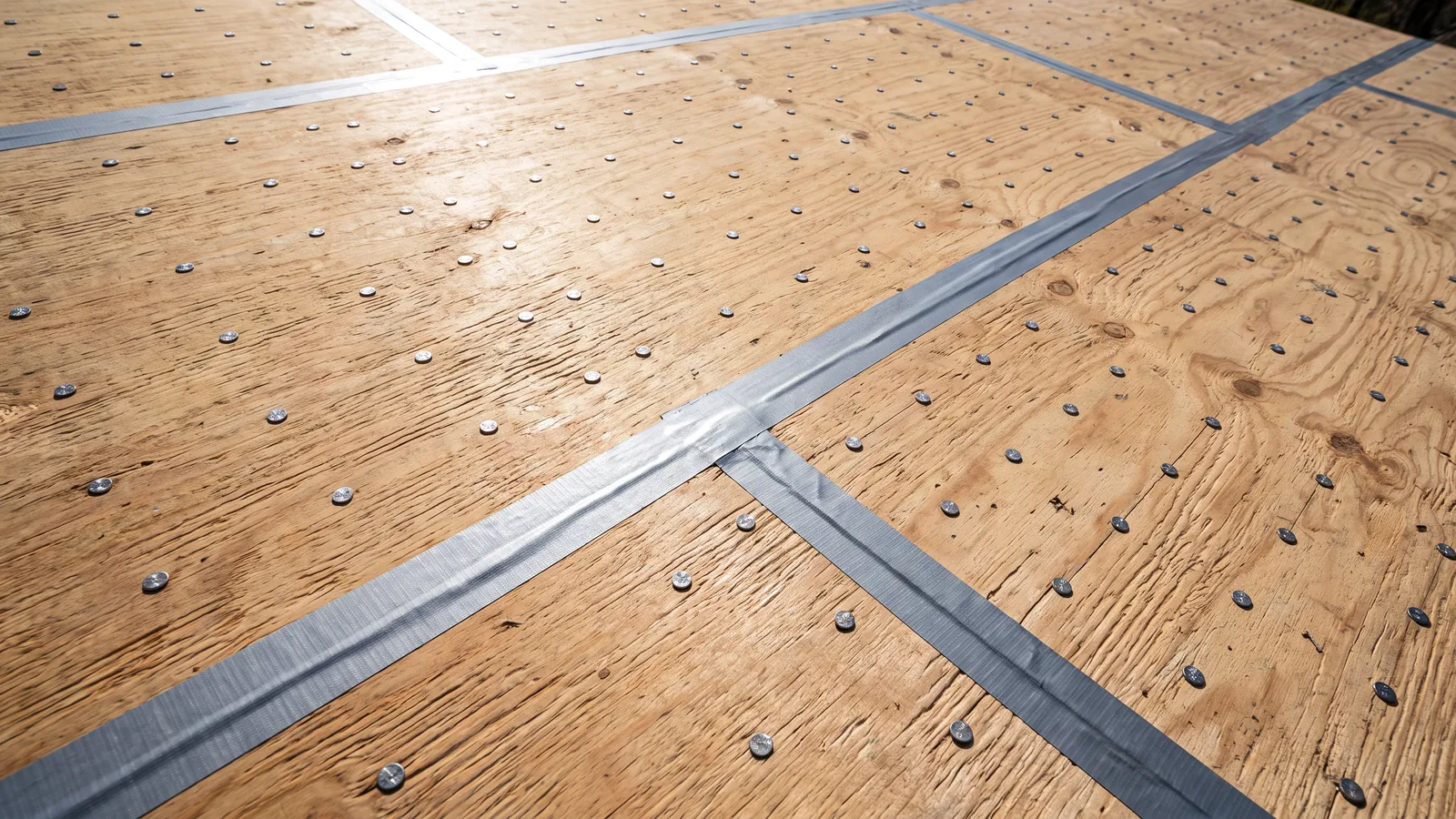
Sealed deck, ring-shank nails and the edge detail the IBHS standard calls for, with the evaluation and the certificate at the end.
FORTIFIED →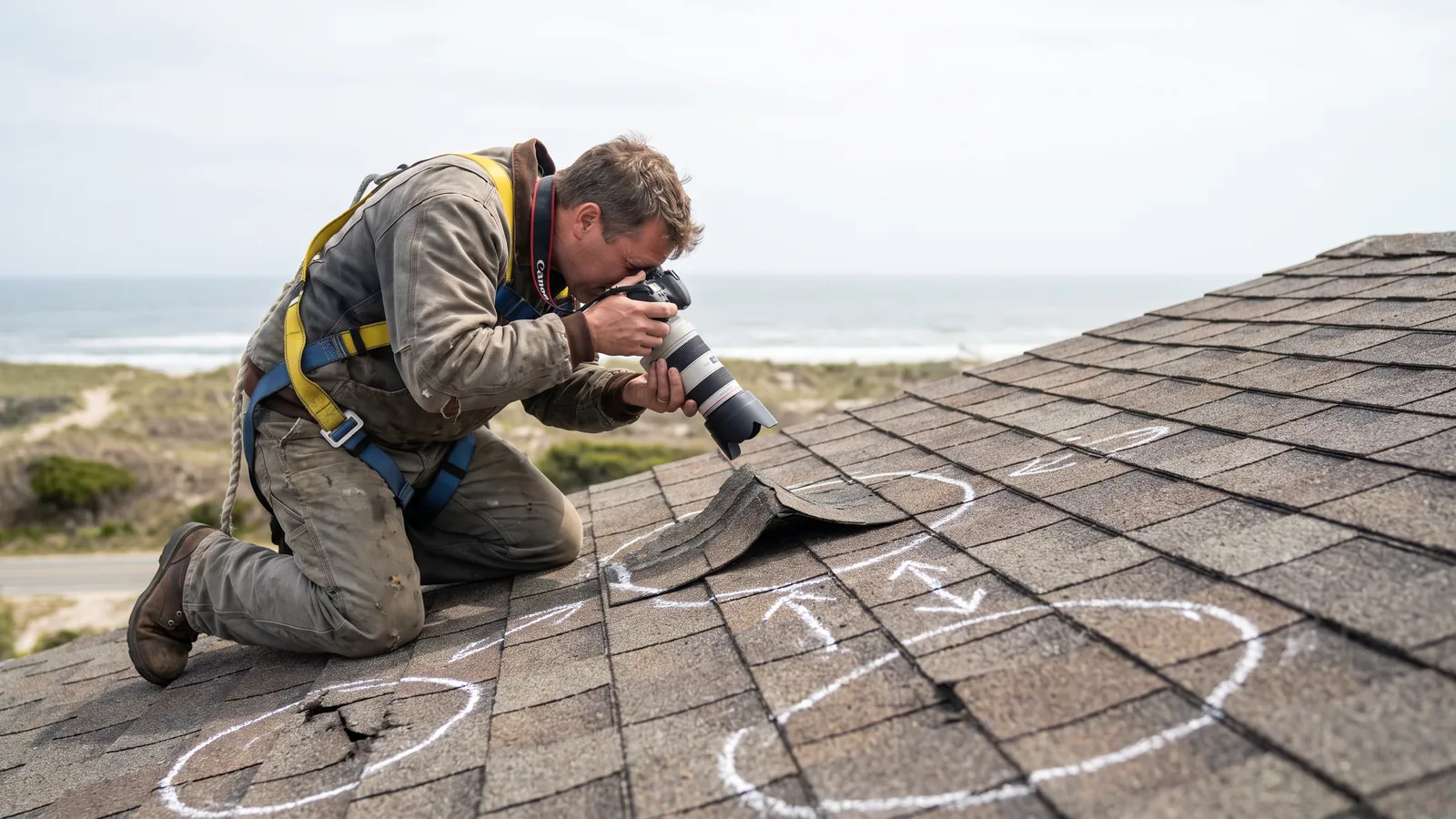
Every slope walked and photographed, with a written report when you need one for a claim, a sale or your own peace of mind.
Inspections →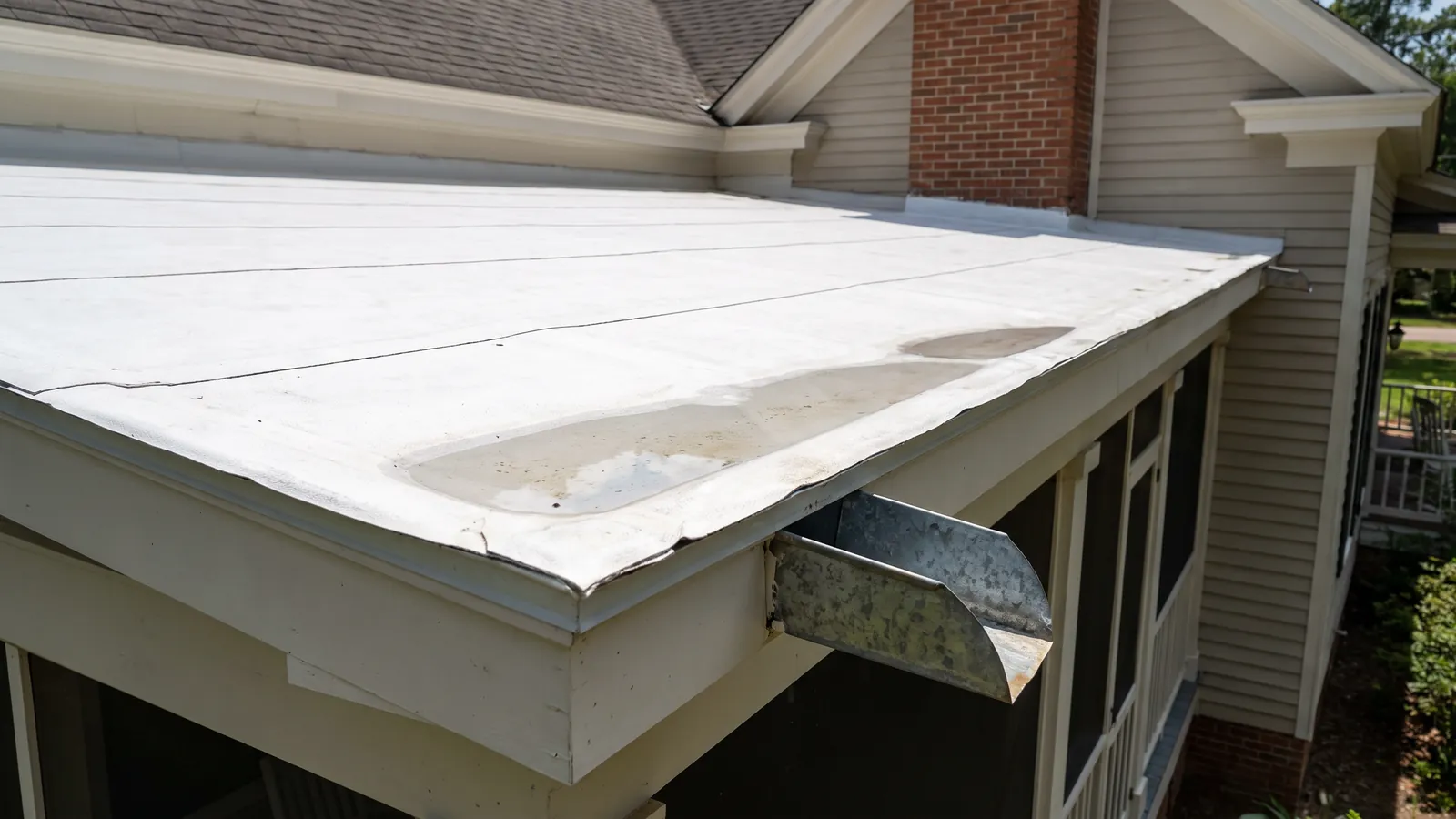
TPO and modified membranes on porches, additions and the flat sections that shingles were never going to work on.
Flat roofs →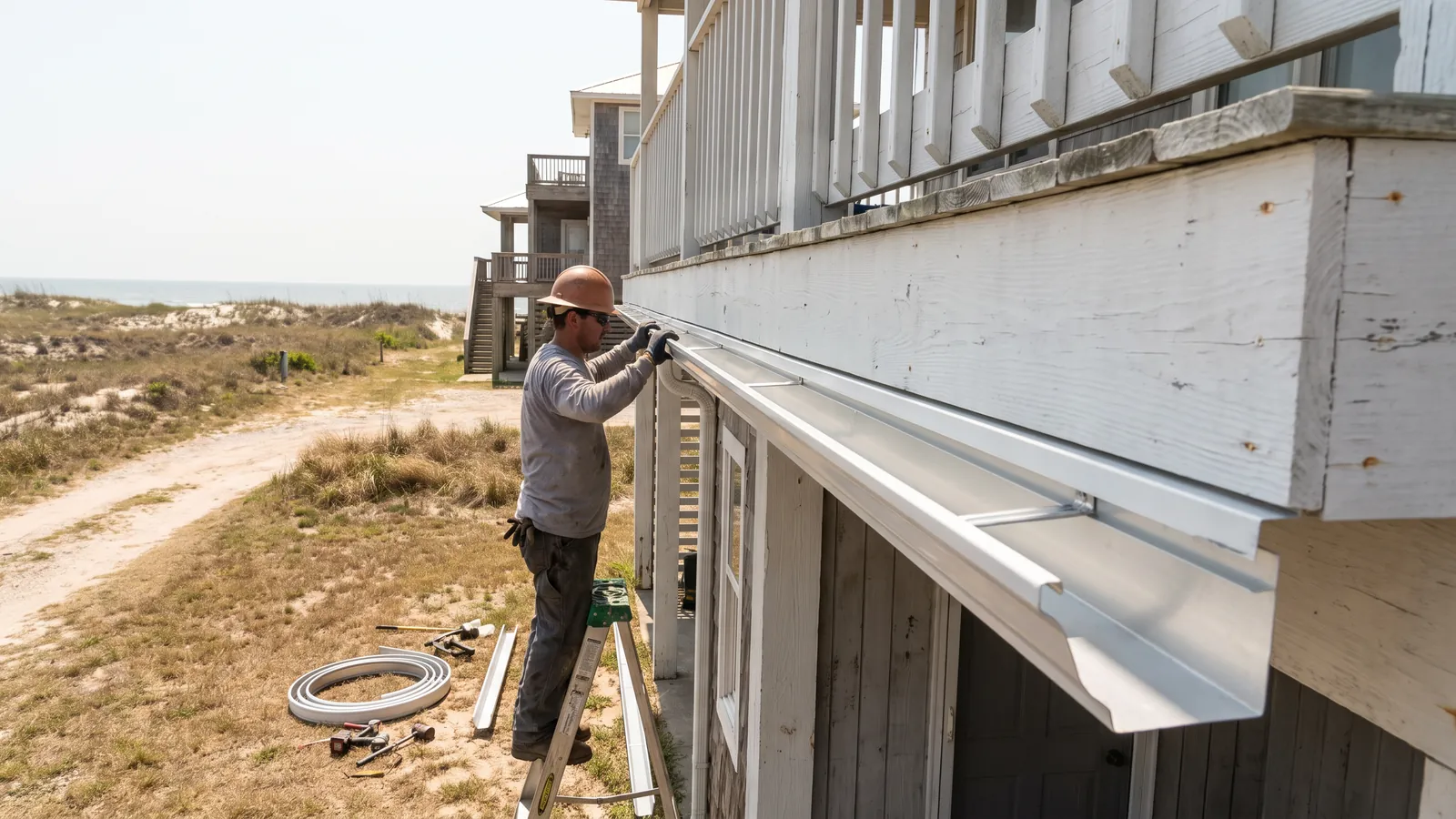
Seamless aluminium sized for the rain that actually falls here, and the rotted eaves that wind-driven rain leaves behind.
Gutters →Roofing on the Mississippi coast is not roofing somewhere else with more humidity. The code, the insurance market and the housing stock were all rewritten by a single storm, and the consequences are still the deciding factors on every job.
Not most reroofs. Every one. The only thing that escapes it is a repair of one square — a hundred square feet — or less, which the city treats as maintenance. Replace any decking and you need a nailing inspection before the underlayment covers it, a final inspection at the end, the permit card displayed where it can be seen from the street, and a notarised inspection affidavit. Urban Development sits at 1410 24th Avenue and takes calls on 228-868-5715. A roofer who suggests skipping this is telling you something about how the rest of the job will go.
The Mississippi State Board of Contractors licenses residential roofing and remodelling work over $10,000, and commercial contracts over $50,000, under classifications such as Residential Roofing and Roofing, Sheet Metal and Siding. Getting one means a law and business exam, a trade exam and general liability cover, with workers' compensation required at five or more employees. Below those figures no state licence applies at all, which is the gap small repair work gets sold into. Ask for the number, then check it.
Coastal wind and hail cover frequently sits with the Mississippi Windstorm Underwriting Association, created in 1987 as the insurer of last resort for homeowners who cannot get wind and hail cover elsewhere. That matters on a claim: wind damage and flood damage are different policies with different adjusters, and a roof can easily involve both. We document what we find accurately and hand it over. We do not adjust claims, we do not characterise damage to suit one, and we never touch a deductible.
Zeta gusted to 103 mph at Bay St. Louis in 2020 and did roughly $650 million in damage across Mississippi. Shingles go from the edges and the ridge first, and the courses either side of a gap are nearly always loose.
Storm damage →Salt air and UV work on the neoprene washers under exposed fasteners until they perish, and a metal roof that has been perfect for fifteen years starts weeping at every screw line at once.
Metal repair →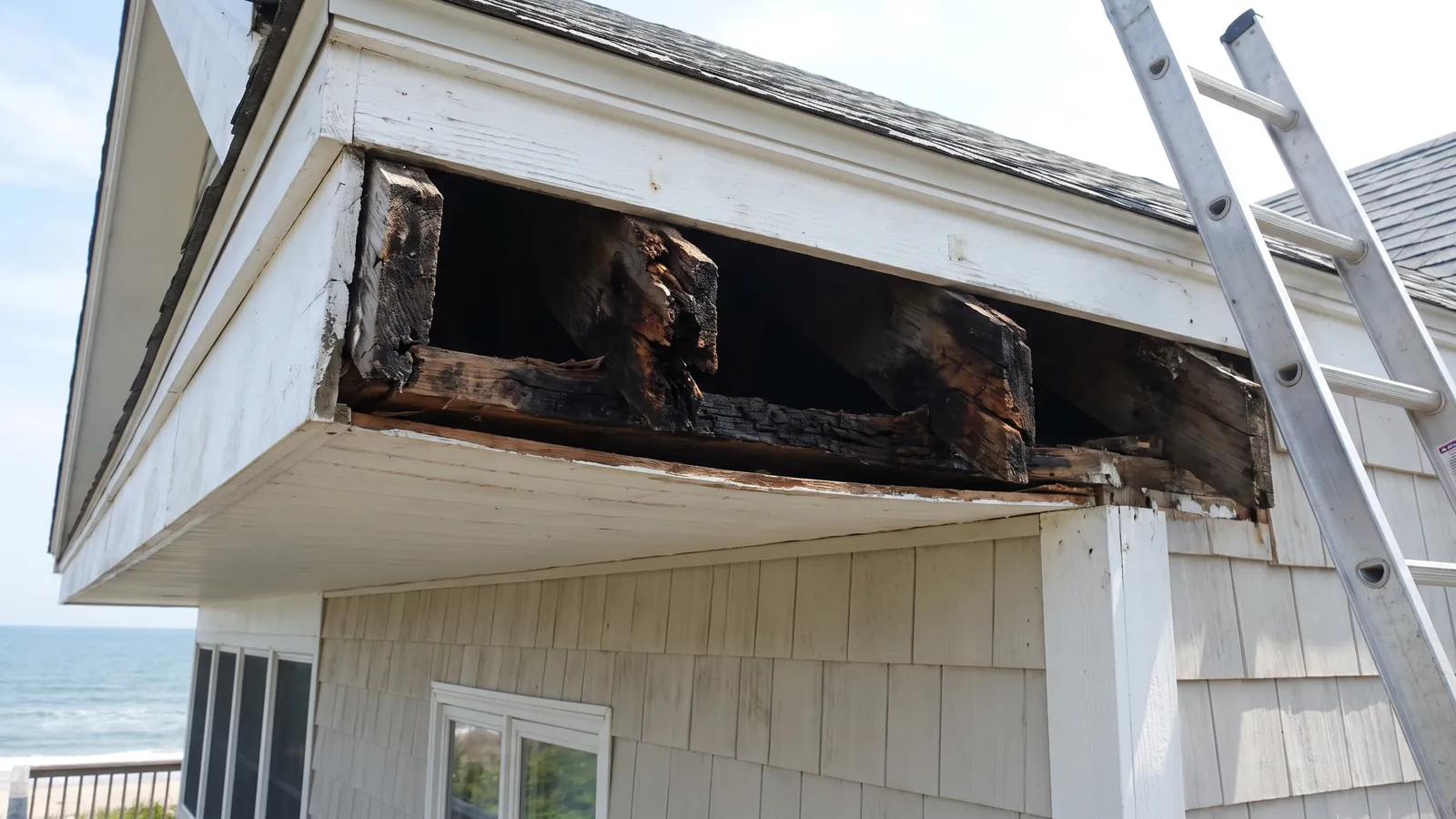
Wind-driven rain goes sideways into soffit vents and behind fascia, and the rafter tails rot from the end in. You usually find it when the gutter starts pulling away from the board.
Soffit and fascia →Rubber boots around plumbing vents crack in this sun within a decade, and flashing at walls and chimneys is where the water goes once the sealant has given up. Most leaks are a penetration, not a field.
Leak repair →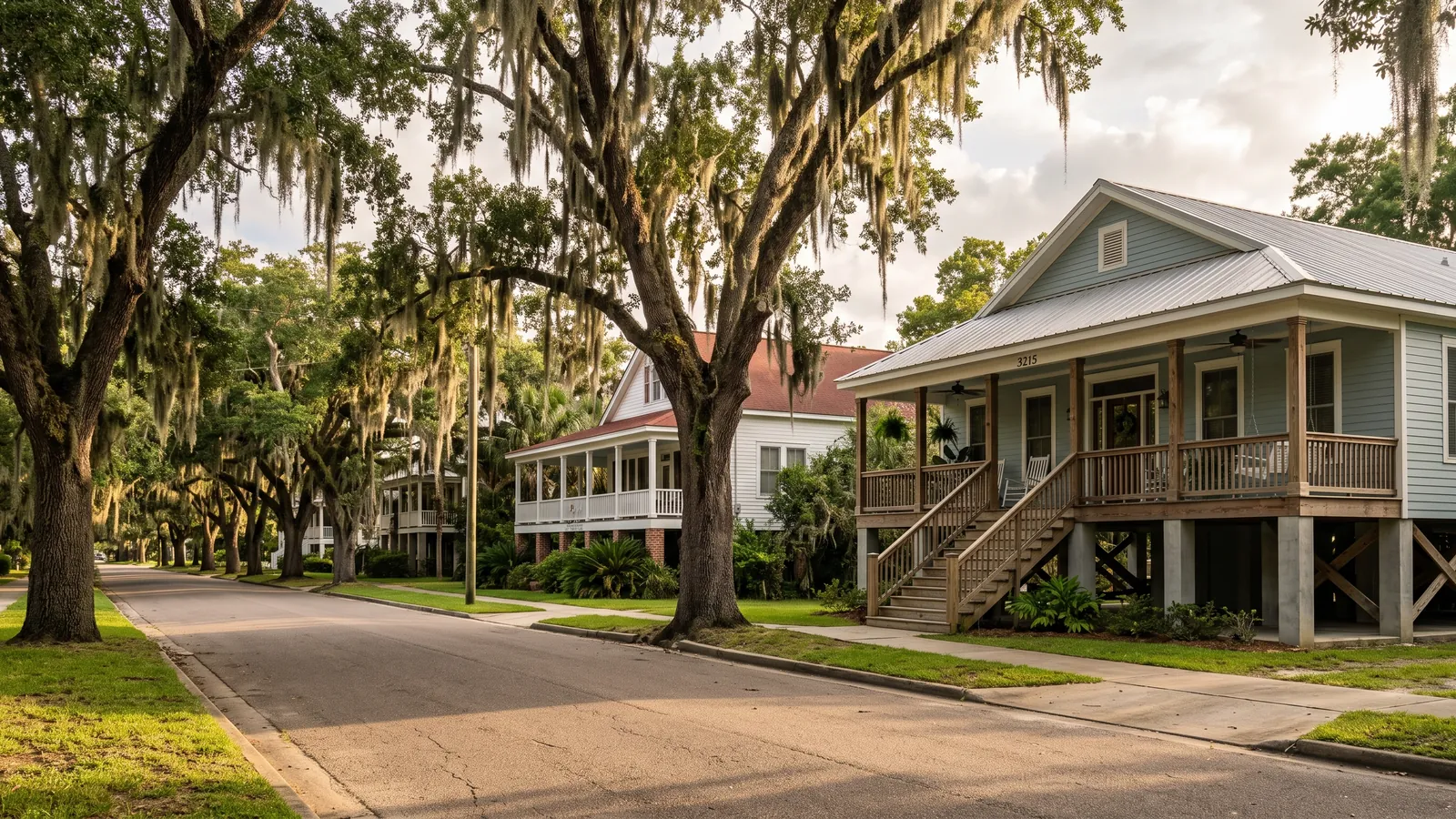
Gulfport's median house was built in 1986, which sounds unremarkable until you look at the towns either side. Pass Christian's median is 2003. Waveland's is 2003. D'Iberville's is 2003. Those are not gentle suburban growth figures; they are the signature of a coastline that lost its housing and rebuilt it under a new code. Diamondhead, a 1970s resort community that took a surge near thirty feet, now has a median of 1997. Ocean Springs, further from the worst of it, still reads 1979.
That split decides what a roof needs. A post-2006 house was built under the rules that HB 1406 forced onto Jackson, Harrison, Hancock, Stone and Pearl River counties, so the deck nailing, the wind rating and the edge detail are usually right and the roof is simply reaching the end of a twenty-year shingle. A house that survived — the older streets in Gulfport, the inland parts of Biloxi, much of Ocean Springs and Gautier — frequently has a roof that predates all of it, sometimes with two layers on it, which the code no longer allows and which has to come off entirely when the time comes.
We work the whole coast: Gulfport, Biloxi, Long Beach, Pass Christian, D'Iberville, Ocean Springs, Bay St. Louis, Diamondhead, Waveland and Gautier.
Where we work →If it is coming in, a tarp goes on before anything else is discussed. A deck that soaks for a fortnight waiting on paperwork costs more to put right than the original damage.
Every slope walked, every penetration checked, the attic looked at from underneath, and the whole thing photographed in the form an adjuster expects, before anything is moved.
Scope, materials, the permit, the inspections and the price, on paper. For a replacement that includes what happens if the decking underneath turns out to be soft, so it is not a surprise mid-job.
One layer only, Class H shingles with six nails or 26-gauge metal, decking nailed to the city's schedule, nailing inspection before cover, final inspection at the end, and the site cleared with a magnet.
Gulfport every day, from the beachfront streets to the thirty-three square miles the city annexed to the north in 1993, plus the Port and the Seabee base. East through Biloxi and D'Iberville to Ocean Springs and Gautier.
West along the coast to Long Beach and Pass Christian, then across the bay to Bay St. Louis, Waveland and Diamondhead in Hancock County. Every one of those towns has its own permit office and its own history with the water, and both matter when a roof is being quoted.
The full service area →
For 2026 budgeting on the coast: an inspection runs $0 to $195 depending on whether a report is needed; a straightforward leak around a vent or a length of flashing is $340 to $780; a wind-damaged section of shingles $480 to $1,400; emergency tarping $380 to $900 depending on the area covered; a full architectural shingle reroof on an average single-storey coastal house $12,500 to $21,000; and standing-seam metal $24,000 to $41,000. Every figure is confirmed after someone has actually been on the roof. The repair cost page and the replacement cost page break each one down.
Yes, and this catches people out. The City of Gulfport requires a permit on every re-roofing project. The only exemption is a repair of one square — a hundred square feet — or less, which counts as maintenance. If any decking is replaced, that needs a permit and a nailing inspection before the underlayment goes on, a final inspection afterwards, the permit card visible from the street throughout, and a notarised inspection affidavit. Urban Development is at 1410 24th Avenue on 228-868-5715. Ocean Springs has the same rule with the same one-square exemption; Biloxi publishes no reroof rule, so call its Building Division on 228-435-6270.
FORTIFIED is a construction standard from the Insurance Institute for Business and Home Safety, and the roof version centres on a sealed roof deck, ring-shank nails and a properly fastened edge. The grant is real: Strengthen Mississippi Homes, run by the Mississippi Insurance Department, pays up to $10,000 toward one. It is owner-occupied single-family primary homes only, recipients are picked by lottery, you pay the Certified FORTIFIED Evaluator yourself, and work started before the award is not covered. Only around 1,500 Mississippi homes are FORTIFIED against roughly 50,000 in Alabama, so the queue is shorter than the money suggests. The grant guide has the eligibility rules in full.
Ask for the number and check it. Mississippi requires a State Board of Contractors licence for residential roofing or remodelling work over $10,000, and for commercial contracts over $50,000, with a law and business exam, a trade exam and general liability insurance behind it. Below those thresholds a licence is not required, which is exactly why small repair jobs attract people with nothing to show. We book the work; the roofing is carried out by independent contractors, and you are entitled to see the MSBOC number and the insurance certificate before anyone climbs a ladder.
All of Gulfport is a high-wind area with a residential design speed of 160 mph on a three-second gust, under the 2018 code the city builds to. In practice that means asphalt shingles tested to ASTM D7158 Class H with at least six nails in each one, metal roofing no thinner than 26 gauge, one layer of roof only with no overlays, and decking nailed at four inches on the edges and six inches through the field. Ocean Springs works to the 2024 code at the same 160 mph. Those numbers exist because of HB 1406, passed after Katrina to make the six coastal counties enforce proper wind and flood provisions.
Photograph everything before anyone touches it, from the ground and from inside if there is water coming in. Then get a tarp on it, because the deck taking water for a week does more damage than the original wind did. Then call your insurer and get an inspection booked. Do not sign anything a door-knocking crew puts in front of you in the first forty-eight hours, and do not accept an offer to cover your deductible — that is fraud, and the homeowner who agrees is part of it. The claims guide sets out the order.
Tarping goes on first so the deck stops taking water, then the roof is inspected and documented properly. Across Gulfport, Biloxi and the coast, with the figure agreed before anything is torn off.