Water finds the path of least resistance, and it is rarely a straight line down
Every roof leak is two problems: where the water is getting in, and where it is coming out. Those are different places, usually by several feet, and fixing the second one without finding the first is how people end up paying three times for the same leak.
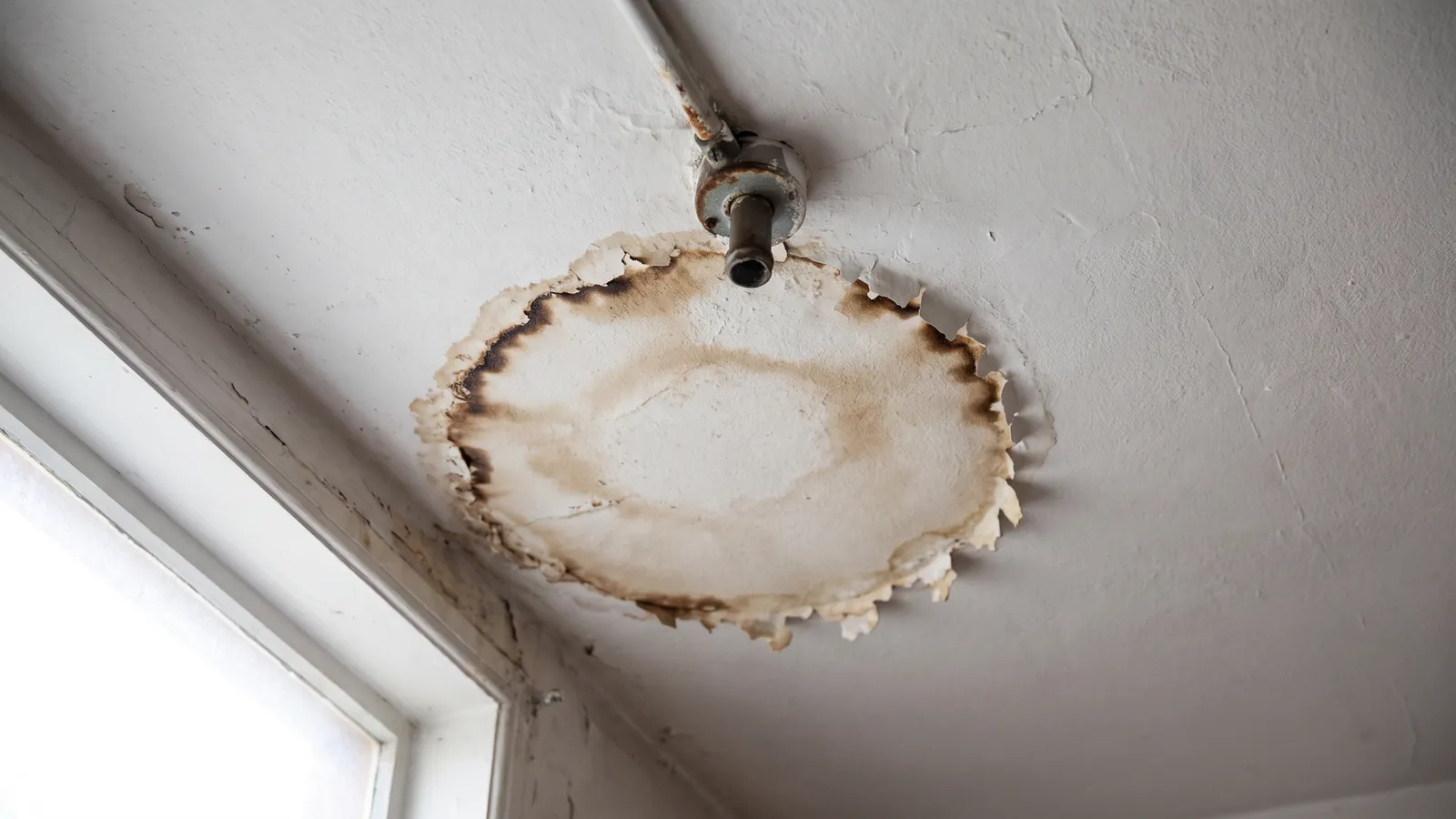
Start with what you can see. A brown ring on a ceiling that grows when it rains is an active leak. A dry, hard stain that never changes is an old one, possibly already fixed, possibly just not wet today. Blistering paint or a sagging patch means water is sitting in the ceiling cavity and that needs attention quickly. A musty smell in a cupboard on an outside wall with no visible stain is often a leak running down inside the wall, which is the worst kind because nothing shows until the damage is substantial.
Where it is actually getting in. On the Gulf Coast the order is fairly predictable. Rubber vent boots around plumbing stacks crack in this sun within eight to twelve years, and they are the single most common entry point we find. Flashing at walls, chimneys, skylights and dormers comes second — the metal is usually fine, the sealant behind it has perished. Valleys take everything two slopes shed and fail at the laps. Nail pops, where a fastener backs out and tents a shingle, let water under a single tab. And on low-slope sections, a failed membrane seam or a blocked scupper lets water stand until it finds a way through.
There is also the leak that is not a leak. Attic condensation in a poorly ventilated roof space produces exactly the same ceiling staining as a genuine leak, appears in cold snaps rather than during rain, and no amount of sealant on the roof will touch it. If the timing does not match the weather, that is the first thing we check.
How we find it. Into the attic first with a torch, following the stained run of decking or rafter upslope to where it starts, which is where the water entered. Then onto the roof to that exact location. Where the path is not obvious — and on a complex roof it sometimes is not — we water-test, running a hose on one section at a time with somebody inside watching. It is unglamorous and it is the only reliable way to be certain rather than hopeful.
What's included
Found from underneath first
The attic is inspected before the roof, because the stained path on the decking leads back to the entry point.
Water-tested where needed
On a complex roof, one section hosed at a time with somebody inside watching, rather than sealing things on a hunch.
Boots replaced, not smeared
A cracked vent boot gets a new one with the shingle work done properly around it. Sealant over a split boot buys one season.
Condensation ruled out
Staining that appears in cold weather rather than rain is an attic ventilation problem, and sealing the roof will not fix it.
Interior damage flagged
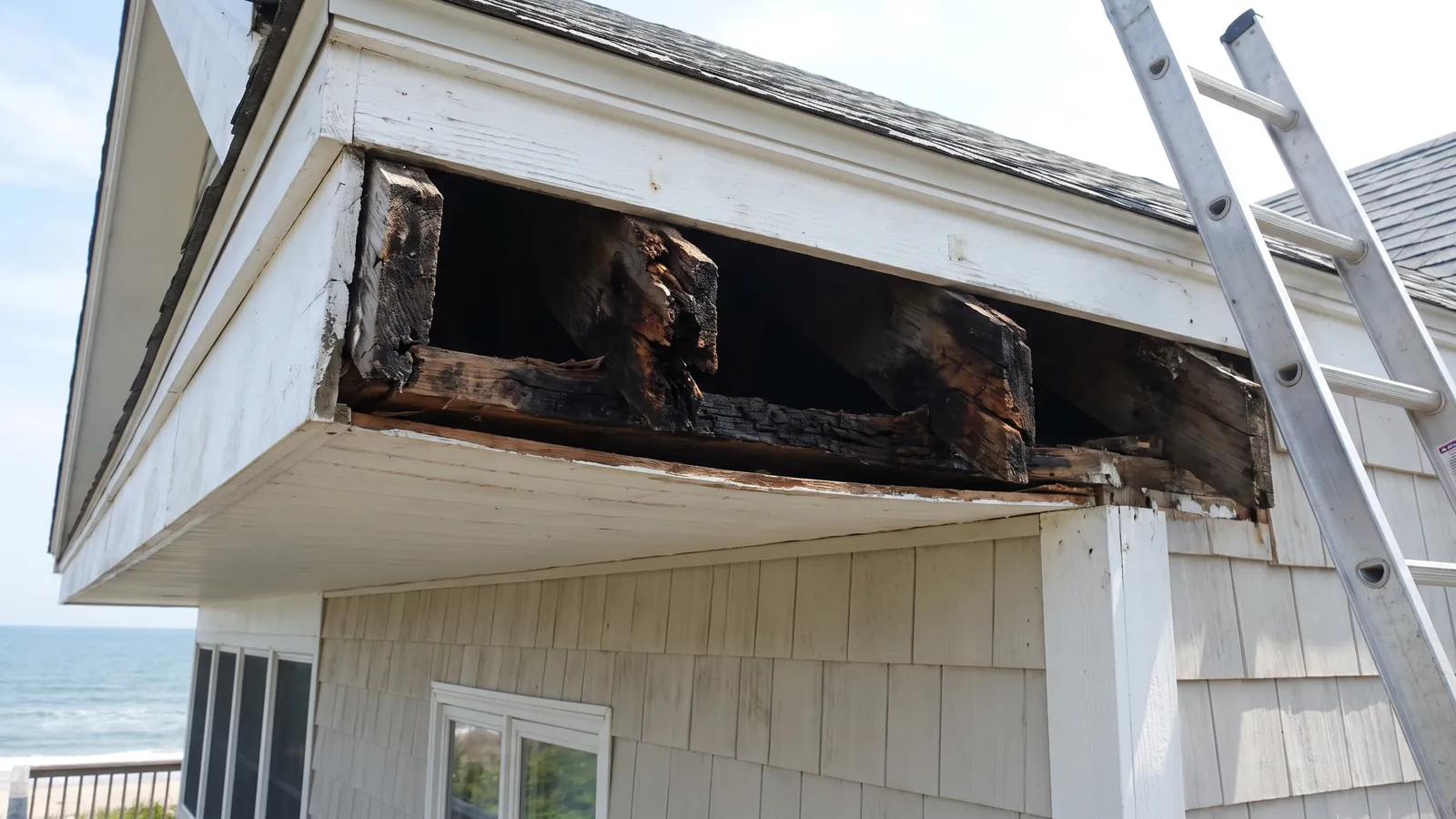
Soaked insulation, stained decking and any sign of rot are photographed and reported, because those outlast the leak.
Permanent rather than temporary
Where a proper fix needs a dry day or a part, you get a tarp now and the real repair booked, with both prices stated.
Roof leak repair prices on the Mississippi coast
| Job | Typical price | Notes |
|---|---|---|
| Leak trace and inspection | $0 – $195 | Free when the repair follows |
| Vent boot replacement | $240 – $460 | Per penetration |
| Flashing re-set at a wall | $380 – $900 | Per run; more where siding must be lifted |
| Chimney flashing and counterflashing | $620 – $1,600 | Depends on chimney size and condition |
| Skylight flashing repair | $480 – $1,200 | Reseal and reflash; new unit priced separately |
| Valley repair | $520 – $1,300 | Per valley run |
| Nail pop repair across a slope | $290 – $620 | Refastened and sealed |
| Water test, complex roof | $180 – $340 | Where the path is not obvious; credited against repair |
These are 2026 ranges for Harrison, Hancock and Jackson counties, to give you something to plan around. The real figure comes after someone has been on the roof, with the scope, the permit and the inspections itemised; written estimates hold for 30 days.
Recent work

Questions we get about roof leak repair
Why is the stain not under the hole?
Because water runs before it drops. It enters at a penetration or a lap, travels along the top of the decking or down a rafter until something stops it — a nail, a joint, a low point — and falls there. Several feet of travel is normal and we have traced more than ten. It is the main reason surface-sealing a suspicious-looking spot so often fails.
It only leaks in heavy rain. Is that still worth fixing?
Yes, and it tells us something useful. A leak that only shows in driving rain usually means wind-driven water getting under a lap or past flashing that is marginal rather than failed. It is a real defect, it will get worse, and it is cheaper to fix now than after the decking has been soaked twenty more times.
Can I just use roof sealant from the hardware store?
As an emergency measure for a day or two, understandably. As a repair, it causes problems: thick sealant traps water against shingles, makes a proper repair harder and more expensive later, and hides the evidence an insurance adjuster needs. If you have already done it, say so — it is useful to know what we are looking at.
What if you cannot find the leak?
We water-test, which finds nearly all of them. If after that it still cannot be reproduced, you are told that plainly rather than sold a speculative repair. Occasionally the answer is attic condensation rather than a leak at all, and the fix is ventilation, which we will point you at.
Will insurance cover a leak?
It depends on the cause. Sudden damage from a storm generally is covered; gradual deterioration of a worn-out roof generally is not, and a leak that has been going for two years is usually read as maintenance. Documenting it properly from the start matters either way — see the claims guide.
How much damage can a small leak do?
More than people expect, because the water spreads across the decking rather than dripping neatly. Soaked insulation stops insulating, decking softens and loses its nail holding, and in this climate mould establishes quickly in a warm wet roof space. A leak found in month one is a boot. In year two it can be decking and ceiling.