Roofing in Pass Christian, a town that is almost entirely twenty years old
Katrina's high-water mark at Pass Christian reached 27.8 feet, a United States record. Of roughly 8,000 homes, about 500 came through undamaged. The median house here was built in 2003, and that single number explains nearly every roof we look at.
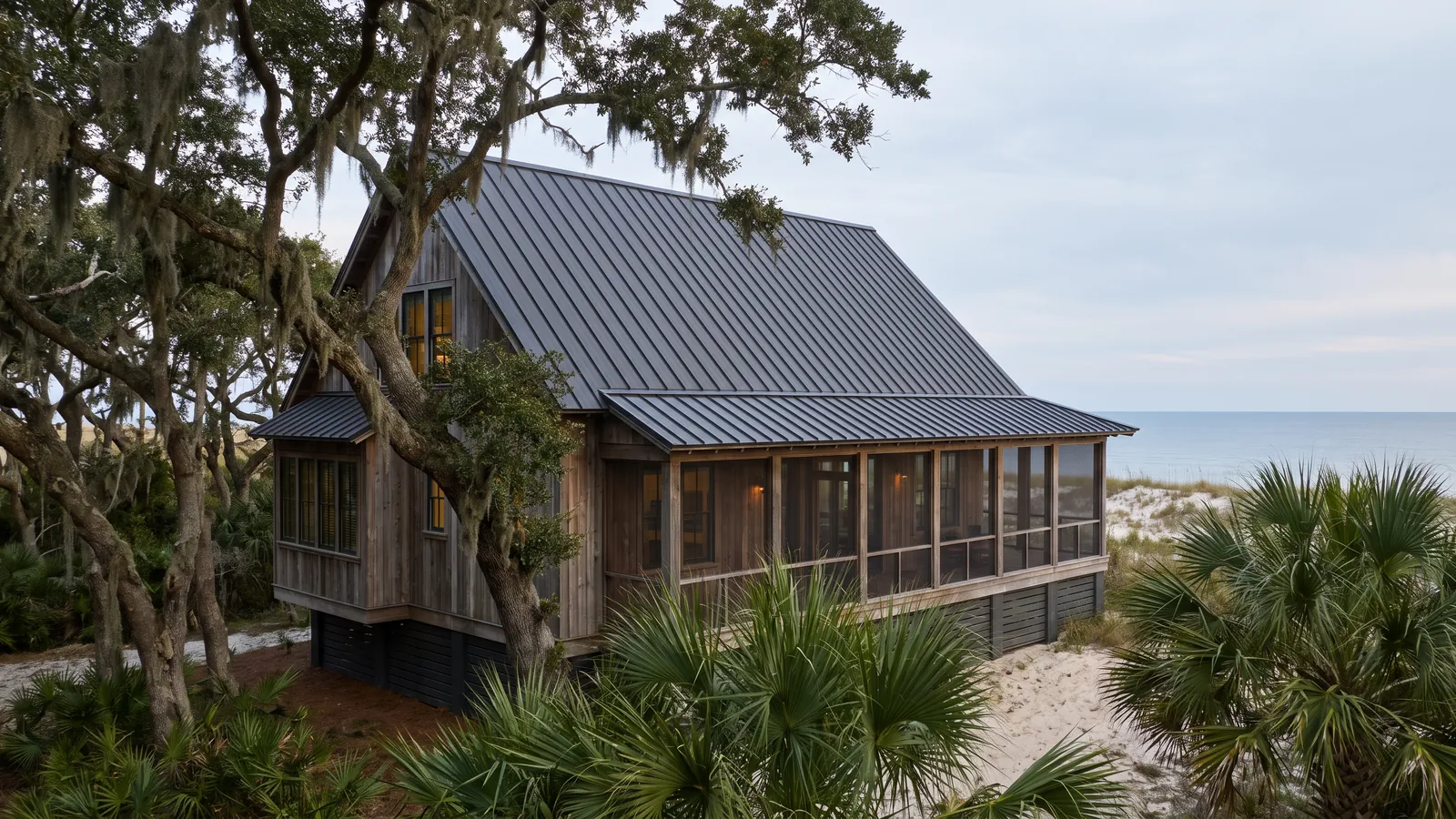
Chartered in 1848 and long one of the handsomest towns on the coast, Pass Christian is now a town of 6,459 people living almost entirely in houses younger than the storm. The implications for roofing are unusually consistent. Decks were nailed under the post-Katrina code, so the substrate is generally sound. Edge detail and wind provisions were specified from the start. Most houses near the water are raised on piers for flood compliance. And a very large proportion of the roofs are now reaching twenty years, which is where an architectural shingle on this coast finishes.
That produces a particular kind of work: clean tear-offs on good decks, with the decision being about what goes back on rather than about what needs fixing underneath. It is also why metal comes up more in this town than anywhere else we cover. Owners who rebuilt once are generally not interested in doing the roof again in twenty years, and standing seam at forty-plus years answers that directly. Along Scenic Drive and the streets behind it, metal is now common enough to be unremarkable.
Wind exposure is extreme and the town knows it. Ida put an EF1 tornado through here in 2021. Nothing stands between the front streets and the Sound. Perimeter and corner fastening, proper starter and drip edge, and — where the budget allows — a sealed deck all earn their place more obviously here than in a sheltered inland subdivision.
The other local factor is the raised housing itself. A pier-built house with a two-storey elevation above grade puts the ridge a long way up, which affects access, safety and how long a job takes. It is a legitimate component of a quote and one that an out-of-town contractor pricing from a satellite image routinely underestimates.
What we do in Pass Christian
Post-2005 decks, clean tear-offs
Substrate generally sound, so the job is about what goes back on rather than what has to be fixed underneath.
Metal discussed seriously
Owners who rebuilt once tend not to want a third roof, and standing seam at forty-plus years answers that.
Extreme exposure detailing
Enhanced perimeter and corner fastening on streets with nothing between them and the Sound.
Raised-house access priced honestly
A pier-built house puts the ridge a long way up, and that affects time, safety and cost.
Twenty-year cohort anticipated
Most of the town's roofs reach end of life within a few years of each other, which is worth planning around.
FORTIFIED where it matters most
A sealed deck is most valuable precisely where the covering is most likely to be tested.
Neighbourhoods and roads we cover
- Scenic Drive and the beachfront streets
- The downtown area and the harbour
- The raised houses on piers south of the railway
- Neighbourhoods north of the CSX line
- Streets toward the Long Beach boundary
- The western approaches toward the bay bridge
- Henderson Point and the western shoreline
- Commercial buildings along the main routes
Roofing services in Pass Christian
- Roof repair, leak tracing, storm damage, emergency call-outs and tarping
- Full replacement, Class H shingle, metal roofing and FORTIFIED upgrades
- Inspections, insurance documentation and claim support
- Flat and low-slope, commercial, gutters and soffit and fascia
Questions from Pass Christian homeowners
Almost every roof here is the same age. Is mine due?
If your house went up in the rebuild, it is around twenty years old, and that is the end of a typical architectural shingle on this coast. It is worth having it looked at rather than waiting for a leak — you will almost certainly be told the same thing your neighbours are hearing.
Why is metal so common in Pass Christian?
Because people here have already replaced a house once. Standing seam lasts forty years or more against roughly twenty for shingle, handles wind by shedding it rather than lifting, and does not mind salt air. For an owner who intends to stay, the arithmetic over the long run is genuinely competitive.
My house is raised two storeys. Does that cost more?
Yes, and legitimately. The ridge is a long way up, access and material handling take longer, wind at that level is stronger, and the safety requirements are greater. A quote produced from a satellite image routinely misses this, which is one reason out-of-town storm-chasing prices look attractive until the crew arrives.
Will a new roof help with insurance?
Often. Age of roof is a significant factor in coastal wind pricing, and some carriers discount for metal. A FORTIFIED designation generally brings a further discount. Ring your carrier with the specifics before deciding what to put on, because the discount can change which option is actually cheapest.
What about the tornado risk?
Ida put an EF1 through Pass Christian in 2021, and tornadoes embedded in tropical systems are a genuine coastal hazard rather than an inland one. Nothing roofs a house against a direct EF1 strike, but proper deck fastening and a sealed deck substantially improve what survives a near miss.
Nearby: Long Beach · Bay St. Louis · Waveland · full service area