A tarp is not a repair. It is what stops the repair getting more expensive.
Between the storm and the roofer there is usually a wait — for an adjuster, for materials, for a queue the length of the coastline. What happens to your decking during that wait is entirely down to whether something got put over it.
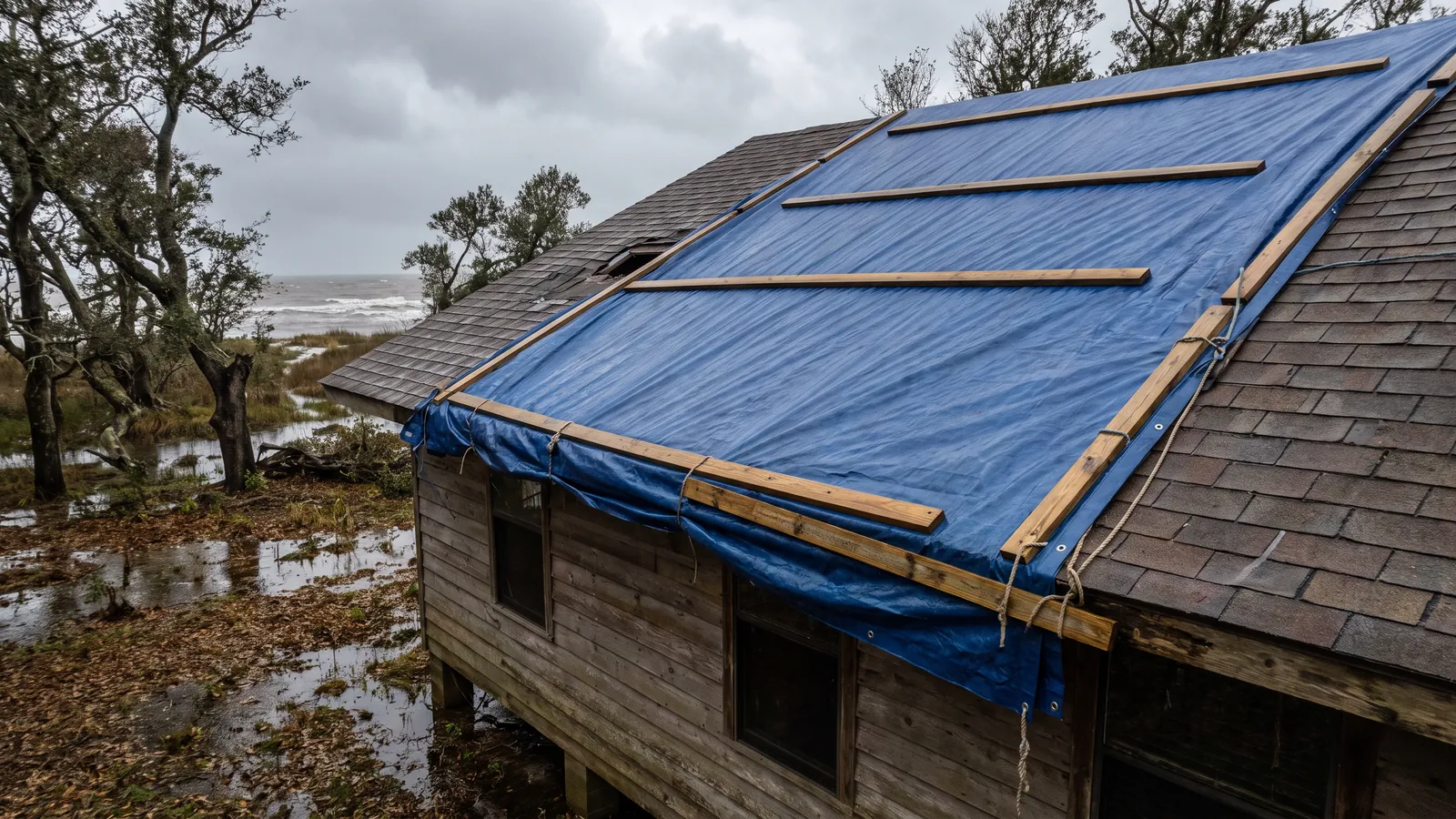
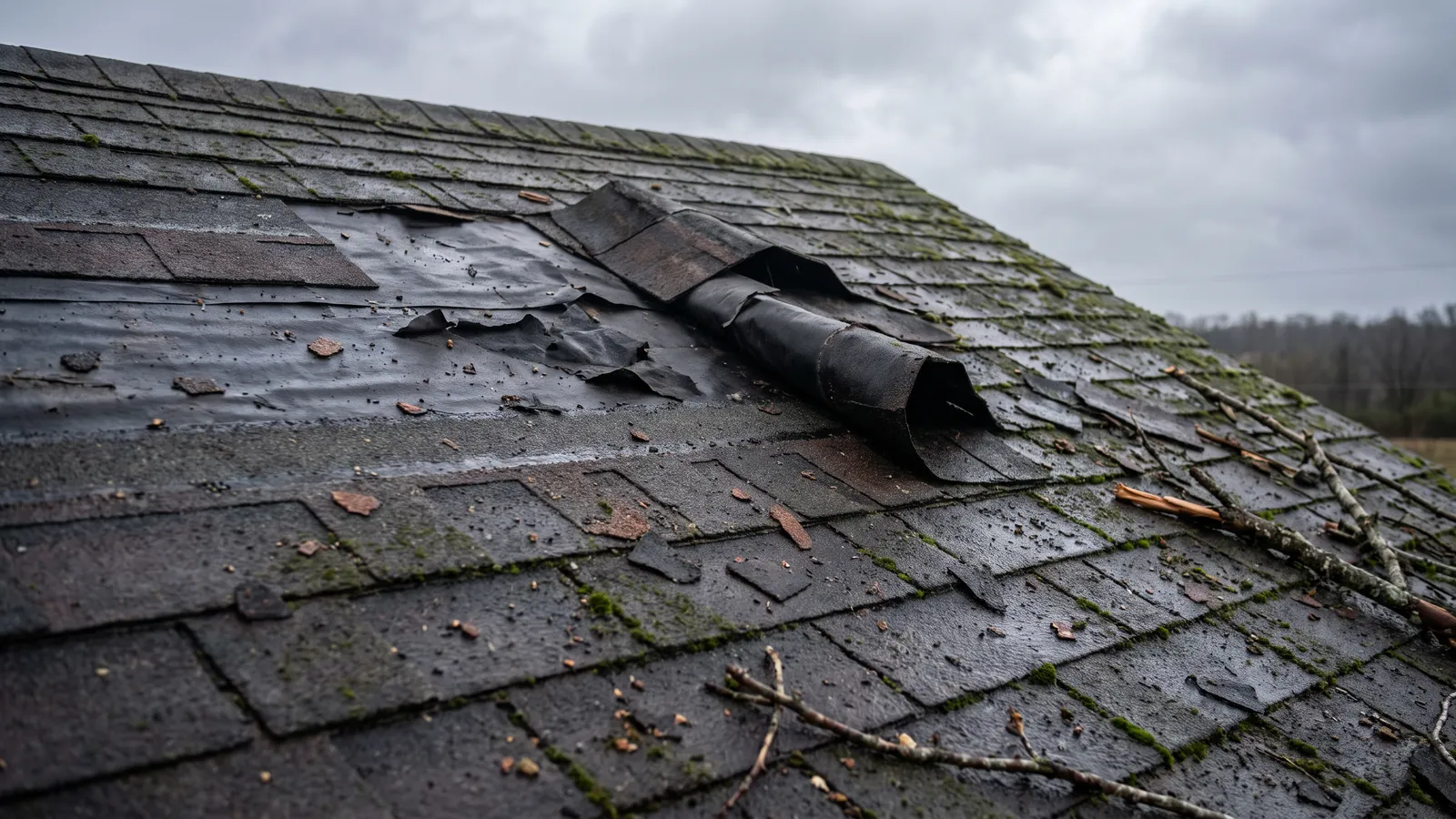
Decking is plywood or OSB. Left open to repeated rain it swells, delaminates, loses its ability to hold a nail, and grows mould in a warm roof space within days rather than weeks. A roof that needed a thousand dollars of shingle work the morning after a storm can need four thousand dollars of decking replacement a fortnight later, and the difference is simply whether water kept arriving. That is the entire argument for tarping, and it is why it goes on before the claim conversation rather than after it.
What a proper tarp looks like. Heavy-duty reinforced polyethylene, not a garden tarpaulin. It runs over the ridge wherever possible, so water cannot drive up under the top edge. It is held with timber battens screwed through the tarp into the decking, with the tarp wrapped around each batten so the fixings are not the only thing resisting wind. The edges are secured all the way round, not just at the corners. Done like that it holds through weather for weeks. Draped over the damage and weighted with whatever was in the garden, it is gone in the first gust and often takes more shingles with it on the way.
Yes, screwing battens into the deck puts holes in it. That is a legitimate question people ask, and the answer is that those holes sit under the new roof covering and are a trivial cost against the decking you are protecting. A tarp fitted without penetrations, on a roof that is about to get another forty mph, is not protecting anything.
How long it should stay on. Weeks, not months. Tarps degrade in Gulf sun faster than people expect, and a tarp that has been up since the last named storm is often doing less than the homeowner believes. If the repair is going to be delayed — a long claim, a materials wait — it needs checking and often re-fitting. We will say so rather than leave you assuming it is fine.
One thing to keep. Photograph the damage before the tarp goes over it. Once it is covered, the evidence is covered too, and an adjuster arriving to a tarped roof has to take somebody's word for what is underneath. We photograph as standard and hand you the file.
What's included
Fitted, not draped
Reinforced tarp over the ridge where possible, battened with timber screwed through into the decking, edges wrapped and secured.
Photographed underneath first
The damage is documented before it is covered, so the claim does not depend on anybody's description.
Sized to the actual damage
Covering the affected slope and a proper margin beyond it, rather than the smallest sheet that hides the hole.
Checked on a long wait
If the repair is delayed by a claim or materials, the tarp gets looked at again rather than assumed good.
Removed with the repair
Taken off, battens removed and the penetrations dealt with as part of the permanent work.
Quoted separately
The tarp has its own figure and the repair has another, so you always know what you have agreed to.
Emergency tarping prices on the Mississippi coast
| Job | Typical price | Notes |
|---|---|---|
| Tarp, small area | $380 – $620 | Up to roughly 300 square feet, battened |
| Tarp, standard slope | $620 – $1,050 | One full slope on an average house |
| Tarp, multiple slopes | $980 – $1,900 | Where damage is spread |
| Tarp, steep or awkward access | Add $180 – $420 | Two-storey, steep pitch or restricted access |
| Night or weekend fitting | Add $140 – $280 | On top of the tarp price |
| Re-fit or replace an aged tarp | $280 – $640 | On a long claim or materials wait |
| Removal with the permanent repair | Included | Battens out and penetrations made good |
| Damage photography and file | Included | Supplied whether or not you claim |
These are 2026 ranges for Harrison, Hancock and Jackson counties, to give you something to plan around. The real figure comes after someone has been on the roof, with the scope, the permit and the inspections itemised; written estimates hold for 30 days.
Recent work
Questions we get about emergency tarping
How long will a tarp last?
A properly battened one holds for several weeks and often a couple of months, but Gulf sun degrades the material faster than most people expect and wind works at any loose edge. If a claim is dragging on, it needs checking. A tarp that has been up since the last storm season is probably not doing what you think it is.
Will screwing it down damage my roof?
It puts screw holes in the decking, which sit under the new covering and cost essentially nothing to deal with during the repair. The alternative — an unfastened tarp on a coastal roof — blows off and frequently takes more shingles with it. The holes are the cheap part of this trade-off by a wide margin.
Can I tarp it myself?
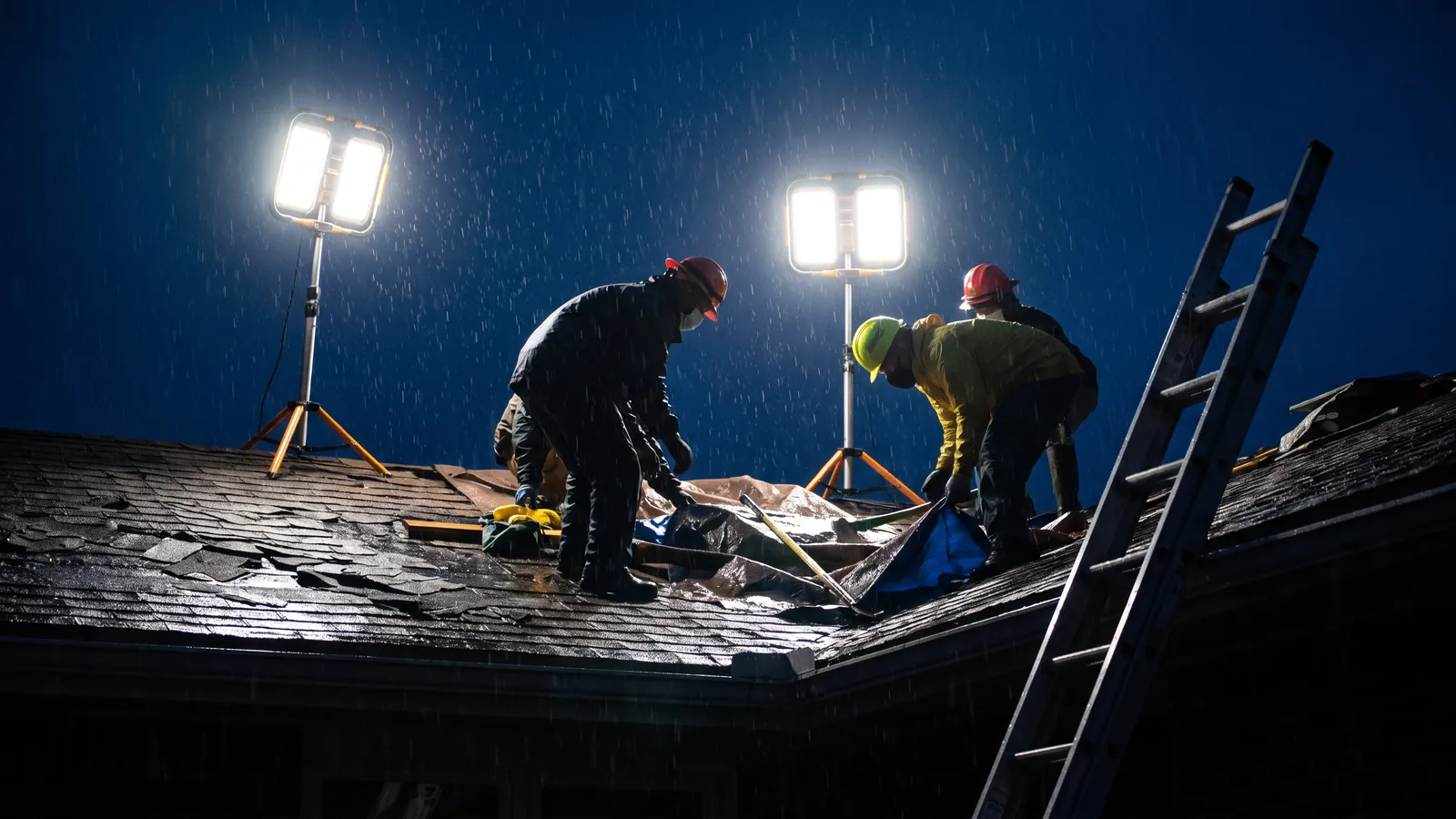
On a single-storey roof in calm, dry daylight, with somebody footing the ladder, it is not unreasonable — and a badly fitted tarp is better than nothing. Do not attempt it on a wet roof, in wind, after dark, or on a two-storey. Falls from roofs during storm clean-up hurt a lot of people every year on this coast.
Does insurance pay for emergency tarping?
Usually, yes. Most policies cover reasonable emergency measures to prevent further damage, and tarping is the textbook example. Keep the invoice, keep the photographs, and tell your adjuster it was done and when. Some policies require you to mitigate further damage, which makes a tarp not just reimbursable but expected.
You tarped it. How soon does the real repair need to happen?
Within weeks rather than months, and sooner if the forecast is active. The tarp is buying you time to get an adjuster out, agree a scope and get on a schedule — it is not a season's solution. We will give you a realistic date for the permanent work when the tarp goes on.
Can you tarp a metal roof?
Yes, though the method differs — battens cannot simply be screwed through panels without creating the next leak, so fixing points are chosen at seams and laps where they can be made good afterwards. Tell us it is metal when you ring so the right materials are on the truck.