Roofing in Waveland, which has rebuilt from two different storms
Waveland has been flattened twice in living memory. Camille made landfall here in 1969. Katrina's 26-foot surge in 2005 destroyed almost everything south of the CSX line. The median house was built in 2003, and the town's whole relationship with roofing follows from that.
Incorporated in 1972, Waveland now has 7,042 residents and 60.9 per cent owner-occupancy. The CSX railway line functions as the town's dividing marker in a way it does in few other places: south of it, almost nothing survived 2005 and the housing is post-reconstruction, much of it raised on piers to meet flood requirements. North of it, more of the older stock came through.
For roofing that produces a clear split. The southern rebuild is post-code housing on sound decks, now around twenty years old — clean tear-offs, predictable quotes, and a cohort of roofs all reaching end of life at once. The northern stock is older, predates HB 1406 and the wind provisions, and a tear-off usually finds light deck nailing and no meaningful edge detail.
What is distinctive about Waveland is the attitude. A town that has been destroyed twice tends not to be sentimental about roofing specifications, and conversations here get technical quickly. People ask about nail patterns, about deck sealing, about what their insurer will actually recognise. FORTIFIED is an easier conversation here than almost anywhere, because the value of a roof deck that sheds water after the covering has gone is not an abstraction to anyone who was here.
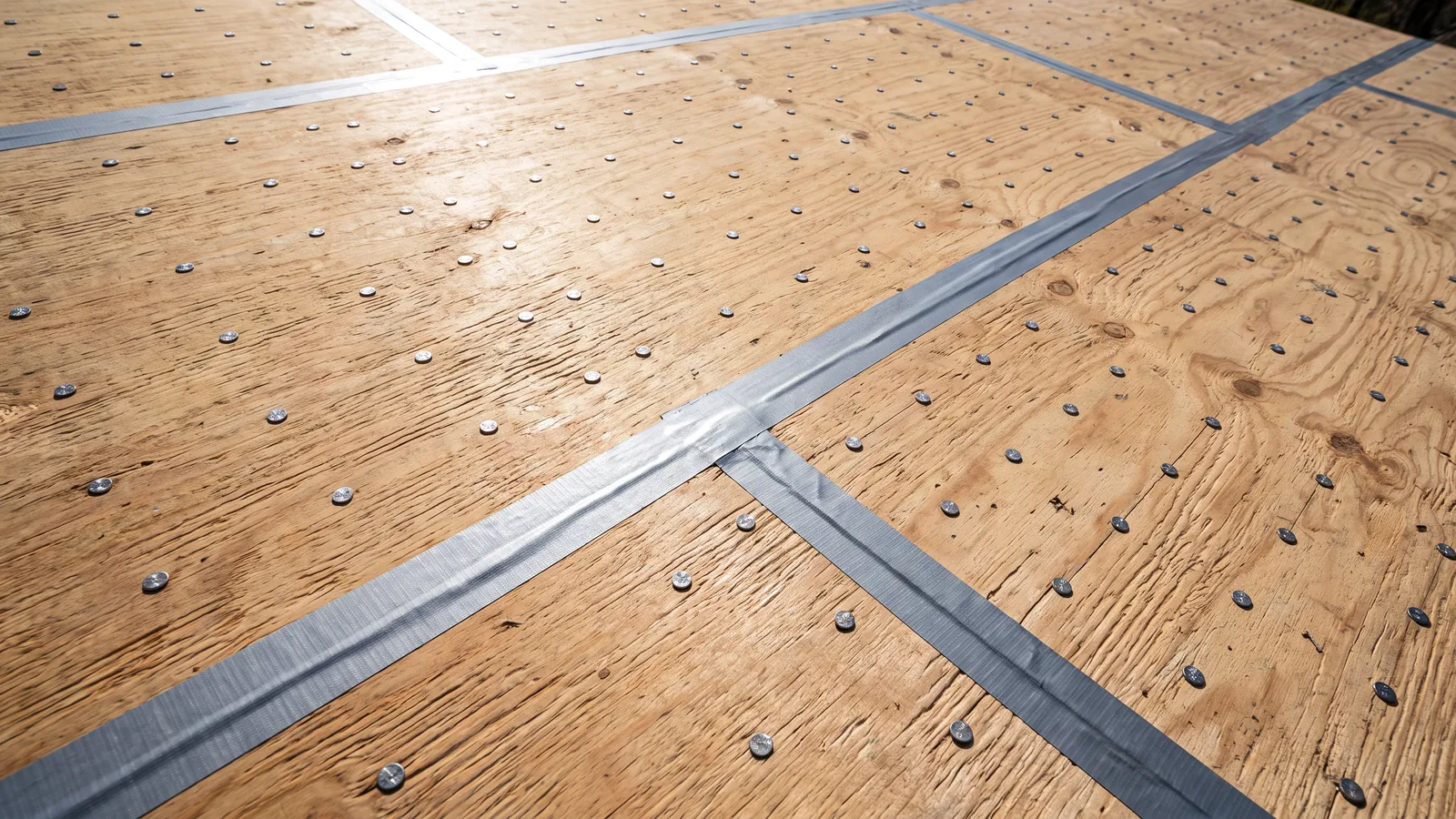
Exposure is severe and there is nothing to break the wind. Perimeter and corner fastening, proper starter courses and drip edge, and ring-shank deck nailing all matter more here than in a sheltered inland subdivision — and all of them are cheap while the deck is open and impossible afterwards.
Hancock County qualifies for the Strengthen Mississippi Homes grant of up to $10,000, subject to the jurisdiction enforcing a code that meets the standard, the home being an owner-occupied primary residence, and selection by lottery.
What we do in Waveland
The CSX line as the dividing marker
Post-2005 rebuild to the south on sound decks, older pre-code stock to the north, each needing a different approach.
FORTIFIED as a normal conversation
A sealed deck is not an abstraction in a town that has watched coverings leave twice.
Technical questions answered properly
Nail patterns, deck sealing and what an insurer recognises get real answers rather than reassurance.
Severe exposure detailing
Enhanced perimeter and corner fastening, proper starter and drip edge, because nothing breaks the wind here.
Raised-house access priced in
Pier construction south of the line affects time, safety and cost, and an honest quote says so.
Grant eligibility checked
Hancock County qualifies for Strengthen Mississippi Homes, subject to the programme's conditions.
Neighbourhoods and roads we cover
- The beachfront along Beach Boulevard
- The rebuilt area south of the CSX line
- Raised houses nearest the water
- Older neighbourhoods north of the railway
- Streets toward the Bay St. Louis boundary
- The western residential areas
- Coleman Avenue and the central district
- Community and commercial buildings
Roofing services in Waveland
- Roof repair, leak tracing, storm damage, emergency call-outs and tarping
- Full replacement, Class H shingle, metal roofing and FORTIFIED upgrades
- Inspections, insurance documentation and claim support
- Flat and low-slope, commercial, gutters and soffit and fascia
Questions from Waveland homeowners
Why does FORTIFIED matter so much here?
Because this town has twice watched roofs lose their covering, and a sealed roof deck is the detail that decides what happens next. If the shingles go but the deck seams are sealed, the structure still sheds water and the inside of the house survives. If they are not, the building fills. That is not theoretical in Waveland.
What is the significance of the railway line?
It marks roughly where Katrina's surge reached. Almost everything south of the CSX line was destroyed in 2005, so that housing is post-reconstruction on sound decks. North of it more survived, and those roofs sit on older structures built before the coastal wind provisions came in.
All the rebuilt roofs are the same age. Does that matter?
It means a large number of them reach end of life within a couple of years of each other, which tightens the schedule when the time comes. It also means the decks underneath are consistently good, so the work is predictable and the quotes hold. On balance that is a helpful position.
Can I get the $10,000 grant?
Hancock County is one of the six named in the programme. The conditions are an owner-occupied single-family primary residence, homeowners insurance with wind coverage, flood insurance if you are in a flood zone, a jurisdiction enforcing a code that meets FORTIFIED, a programme-authorised contractor, and no work started before the award. Selection is by lottery.
Is a raised house harder to roof?
It takes longer and needs more care — the ridge is higher, material handling is slower, and wind at that level is stronger. It is a genuine cost component rather than padding, and a quote produced without seeing the house tends to miss it.
Nearby: Bay St. Louis · Diamondhead · Pass Christian · full service area