Before the season, and the morning after
Most of what determines how a roof comes through a storm was decided months earlier. The rest is decided in the first forty-eight hours afterwards, and mostly by whether anyone photographed anything.
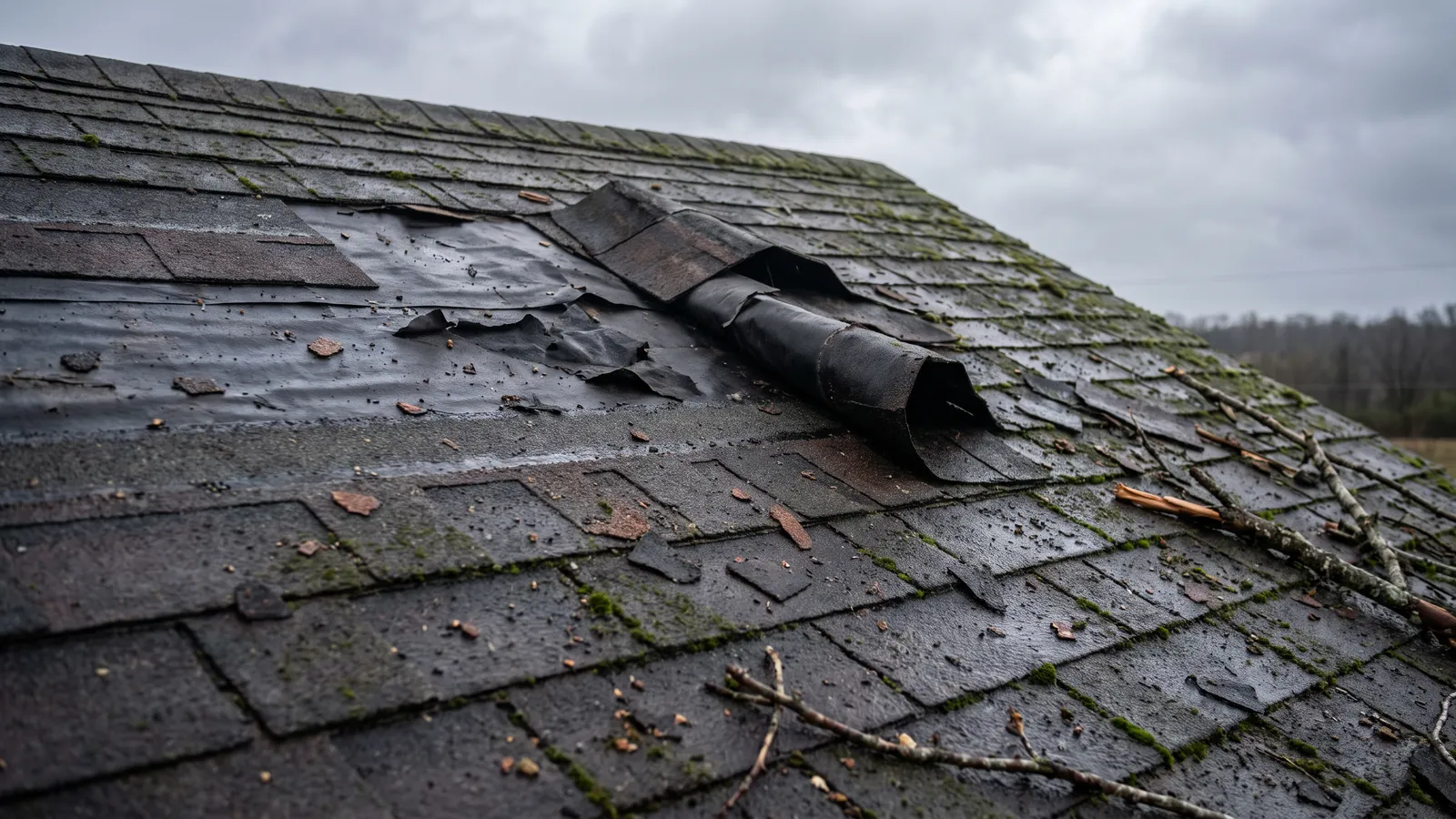
Before the season
Work through this in late spring, while contractors are available and the weather is workable.
- Get it inspected. Every slope walked, tabs lifted, attic checked. Last year's storm may have broken seal strips that are still lying flat and holding nothing.
- Fix loose shingles now. A lifted edge is where uplift starts, and it is a cheap repair in May and an expensive one in September.
- Check the drip edge and rakes. The perimeter is where wind gets under a roof. Missing or loose drip edge is a priority item.
- Clear the gutters and valleys. Blocked outlets back water up under the courses during the rainfall a tropical system brings, which is a lot in a short time.
- Trim back overhanging limbs. Especially in wooded Diamondhead and Gautier. A limb that abrades shingles all year is the same limb that comes through the roof in a storm.
- Look at the soffit and fascia. Wind-driven rain enters there, and rotten rafter tails mean the gutter is about to come off.
- Photograph the roof while it is undamaged. Every slope, in good light, dated. This is the single most useful thing on this list and nobody does it. A "before" set makes a storm claim straightforward.
- Read your policy. Find your wind and hail deductible, whether it is a percentage or a flat sum, whether the roof settles at replacement cost or actual cash value, and whether cosmetic damage is excluded. Do this in May, not in October.
When a storm is coming
There is very little useful work to be done on a roof in the last forty-eight hours, and a great deal of risk in trying. Secure what is on the ground — furniture, bins, anything that becomes a projectile — clear the gutters if you safely can, and leave the roof alone. Nobody should be on a ladder in rising wind.
The morning after
- Safety first. Downed lines, standing water, unstable structures. Do not climb anything, and do not go into a roof space you cannot see into.
- Photograph everything, immediately. From the ground at multiple angles, the interior, any debris in the garden that came off the roof, and collateral damage — dented gutters, torn screens, damaged air conditioning fins — which corroborates a wind or hail event.
- Get a tarp on anything open. This is the priority above all else except safety. A deck that soaks for a fortnight turns a shingle job into a decking job. See tarping.
- Ring your insurer and open the claim. Note the date, the storm name and the claim number.
- Book an inspection. From somebody who will walk the roof and lift tabs rather than fly a drone over it.
- Keep every receipt. Tarping, emergency work, accommodation if you had to leave. Most policies cover reasonable mitigation.
- Do not sign anything in the first forty-eight hours. Not a contract, not an assignment of benefits, not a "work authorisation" handed over on a clipboard by someone who knocked.
The offer to refuse
Anyone offering to cover, waive, absorb or discount your deductible is proposing insurance fraud, and the homeowner who agrees is a participant. It is offered across Harrison and Hancock counties within days of every significant storm. It is also the most reliable single indicator of a company that will not exist when the roof needs a warranty call.
What history says about the odds
Katrina in 2005 is the one everyone remembers, and it is not the one that should shape your planning. Zeta in 2020 was not a major hurricane and still gusted to 103 mph at Bay St. Louis with around $650 million of Mississippi damage. Ida in 2021 produced an EF1 through Pass Christian and Diamondhead. Francine in 2024 brought 49 mph gusts to Gulfport and left 60,000 Mississippi customers without power. The storms that take roofs here are mostly the ordinary ones, and they arrive every few years.
Common questions
What is the single most useful thing I can do?
Photograph your undamaged roof, every slope, in good light, dated. It costs nothing, takes ten minutes, and it is what turns a contested storm claim into a straightforward one — because the adjuster can see exactly what changed rather than taking anyone's word for it.
Should I get my roof inspected before every season?
If it is over ten years old or has been through a storm since the last inspection, yes. The specific thing being looked for is seal strips broken in a previous blow — shingles lying flat, looking perfect, holding nothing. They are the ones that leave next time.
Is there anything worth doing in the last two days?
Very little on the roof, and a lot of risk in trying. Secure loose items on the ground, clear gutters if you can do it safely, and stay off ladders. A roof that needed work in May cannot be fixed in the forty-eight hours before landfall.
How soon should I get a tarp on?
As soon as it is safe to be on the roof. Every day the decking takes water is damage accumulating, and after a widespread event the queue for tarping lengthens fast. If you can safely cover it yourself in daylight and calm conditions, that is better than waiting.
When should I call my insurer?
Within the first day or two, after photographing. Opening a claim does not commit you to pursuing it, and claim numbers and dates get harder to establish as time passes. If the damage turns out to be below your deductible you can simply not proceed.
Related: Storm damage repair · Emergency tarping · Insurance claims · FORTIFIED roofs